
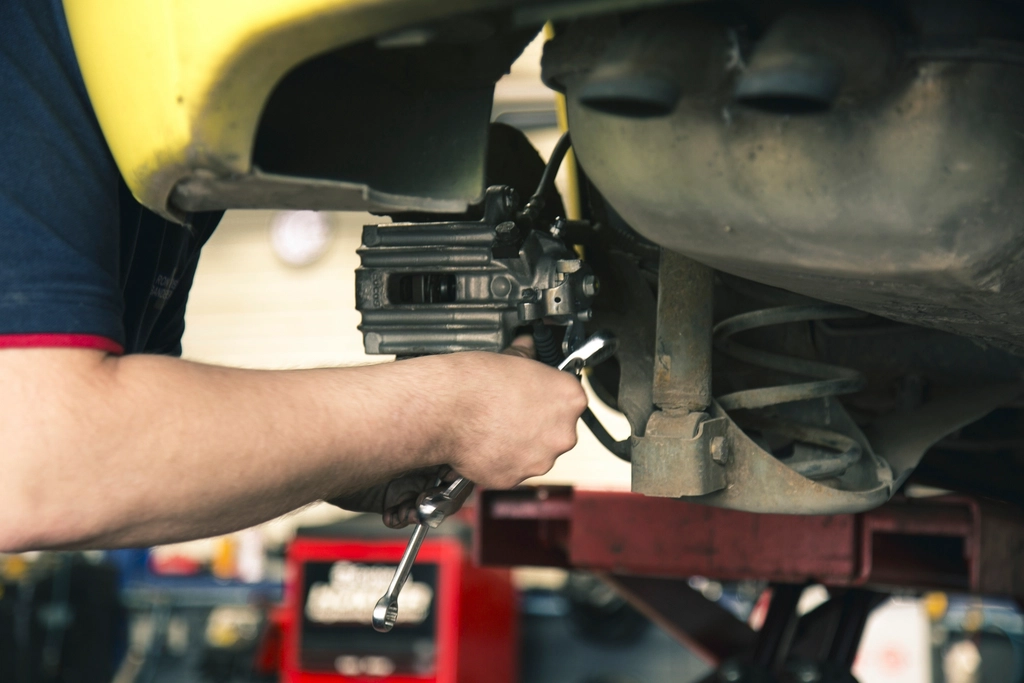
Your car is probably the second most expensive thing you own, yet it is the one machine most people run until something breaks. That habit is costly. A neglected engine, a worn brake pad, or a slow tire leak rarely stays cheap — small problems compound into breakdowns, tow bills, and repairs that dwarf what prevention would have cost. A vehicle maintenance checklist changes the story. It turns car care from a scramble after a warning light into a calm, predictable routine that keeps you safe, protects resale value, and squeezes far more reliable miles out of a machine you have already paid for.
🔧 What Is Vehicle Maintenance?
Vehicle maintenance is the ongoing practice of inspecting, servicing, and replacing the parts and fluids that keep a car running safely and efficiently. A maintenance checklist is the operational side of that discipline — a structured list of what to check and when, so nothing important slips through the cracks between the moments you actually think about your car.
It helps to sort every task into three broad categories:
- 🗓️ Scheduled maintenance follows the manufacturer’s timeline — oil changes, filter swaps, and fluid flushes done at set mileage or time intervals whether or not anything feels wrong.
- 👁️ Preventive inspections are the regular look-overs — tires, brakes, lights, belts, and hoses — that catch wear early, before it becomes a failure on the road.
- 🚨 Corrective repairs are the reactive fixes you make when something has already worn out or broken, ideally caught by the first two categories long before they leave you stranded.
The goal of a good checklist is to shift as much work as possible out of that last, expensive category and into the first two. Prevention is almost always cheaper, safer, and less disruptive than a roadside failure.
🎯 Why Regular Maintenance Matters
The strongest argument for routine care is safety. Brakes, tires, steering, and lights are the systems that keep you and everyone around you alive, and every one of them degrades gradually enough that you may not notice until it fails at the worst possible moment.
It prevents expensive breakdowns. Most catastrophic failures start as minor, cheap-to-fix issues — a low coolant level that becomes a warped head, a squeaking belt that snaps on the highway. Catching them early turns a four-figure repair into a routine service.
It protects resale value. A car with a complete, documented service history sells faster and for more. Buyers and dealers pay a premium for evidence that the vehicle was cared for rather than driven into the ground.
It saves fuel and money over time. Underinflated tires, a clogged air filter, and dirty oil all make the engine work harder and burn more fuel. Small maintenance items quietly add up to real savings at the pump across a year.
It keeps your warranty valid. Skip the manufacturer’s scheduled services and you may hand the automaker a reason to deny a warranty claim. Following the schedule keeps that protection intact.
📈 The Systems That Actually Matter
One of the biggest traps in car care is treating every noise and gauge as equally urgent while ignoring the systems that genuinely keep you safe. The checks below are organized by vehicle system, each with a real-world example so you know what “healthy” looks like and when to act.
Engine and Fluids
- 🛢️ Engine oil and filter — the lifeblood that lubricates and cools moving parts; check the level monthly and change on schedule. Example: modern synthetic oil typically lasts around 7,500–10,000 miles, but a car that mostly does short city trips should change closer to the low end.
- 🌡️ Coolant and radiator — protects against overheating and freezing; check the level when the engine is cold. Example: a coolant level that keeps dropping with no visible puddle often signals an internal leak worth diagnosing before it warps the engine.
- 💨 Air and cabin filters — keep clean air flowing to the engine and the cabin; inspect at every oil change.
Tires and Brakes
- 🛞 Tire pressure and tread — the only thing connecting you to the road; check pressure monthly and tread depth regularly. Example: a coin test showing tread worn down to roughly 2/32 of an inch means the tire is legally and practically due for replacement.
- 🛑 Brake pads and rotors — your primary safety system; listen for squeals and feel for vibration. Example: a high-pitched squeal when braking is usually the wear indicator doing its job, warning you weeks before metal-on-metal damage begins.
- ⚖️ Wheel alignment and rotation — keeps tires wearing evenly and steering true; rotate roughly every 5,000–8,000 miles.
Electrical and Visibility
- 🔋 Battery and charging — starts the car and powers everything electronic; check terminals for corrosion and test capacity before winter.
- 💡 Lights and signals — how you see and how others see you; walk around the car monthly to confirm every bulb works.
- 🌧️ Wipers and washer fluid — critical for visibility in bad weather; replace blades that streak or chatter. Example: wiper rubber typically hardens and streaks after about six to twelve months, long before the blade looks obviously worn.
⭐ The single most important habit: regular oil changes
If you do only one thing, change the oil and filter on schedule. Clean oil is what keeps an engine — the single most expensive component in the car — from grinding itself to death. Skipping oil changes to save a little now is the fastest known way to turn a running vehicle into a very costly repair or a scrapyard candidate.
📋 Maintenance Cheat-Sheet (Quick Reference)
| Task | What it does | Typical interval | Where to check |
|---|---|---|---|
| 🛢️ Oil & filter change | Lubricates & cools the engine | ~5,000–10,000 mi | Owner’s manual |
| 🛞 Tire rotation | Evens out tread wear | ~5,000–8,000 mi | Tire shop, manual |
| 🛑 Brake inspection | Checks pads & rotor wear | Every 12,000 mi or yearly | Mechanic |
| 💨 Air filter | Keeps clean air in the engine | ~15,000–30,000 mi | Manual, self-check |
| 🌡️ Coolant flush | Prevents overheating & corrosion | ~30,000–60,000 mi | Manual |
| 🔋 Battery test | Confirms reliable starting | Every 6–12 months | Auto parts store |
| 🌧️ Wiper blades | Maintains clear visibility | Every 6–12 months | Self-check |
🛠️ The Basic Tools You Need
You do not need a full workshop to handle routine care. The kit below covers the checks and small jobs most owners can do at home — the tools matter far less than the discipline of using them on a regular schedule.
| Tool | Best for | Rough cost | Skill level |
|---|---|---|---|
| 🔘 Tire pressure gauge | Checking inflation accurately | Low | Easy |
| 🔧 Basic socket set | Most bolt-on jobs | Medium | Easy |
| 🛗 Jack & jack stands | Safely lifting the car | Medium | Medium |
| 🔌 OBD-II scanner | Reading warning-light codes | Low–Medium | Easy |
| 🧴 Funnel & drain pan | Fluid top-ups & changes | Low | Easy |
| 🔦 Flashlight & gloves | Inspections in tight spots | Low | Easy |
| 📓 Service logbook or app | Tracking what’s due next | Free–Low | Easy |
A simple logbook reviewed every month beats an expensive tool kit that stays in the box.
🔗 Understanding Fluid Types
Fluids are the circulatory system of your car, and each one does a different job on a different timeline. Knowing what each fluid controls — and roughly when it wears out — helps you catch trouble before a gauge ever lights up.
| Fluid | What it does | Typical lifespan | Watch out for |
|---|---|---|---|
| 🛢️ Engine oil | Lubricates moving parts | ~5,000–10,000 mi | Dark, gritty texture |
| 🌡️ Coolant | Regulates temperature | ~30,000–60,000 mi | Rusty color or low level |
| 🛑 Brake fluid | Transfers pedal pressure | ~2–3 years | Soft or spongy pedal |
| ⚙️ Transmission fluid | Enables smooth shifting | ~30,000–60,000 mi | Burnt smell, dark color |
| 💧 Power steering fluid | Eases steering effort | ~50,000+ mi | Whining, stiff wheel |
Most of these are quick to inspect yourself with the engine cold and the car on level ground. If a fluid looks dark, smells burnt, or keeps dropping without an obvious cause, treat it as a signal to dig deeper rather than simply topping it off and moving on.
🧭 7-Step Maintenance Framework (Checklist)
Good car care only works when it is built on a clear routine. Work through this checklist in order — you can literally tick each box as you build your maintenance habit.
💡 Worked Example: A Daily Driver Applies This
Raj commutes about 40 miles a day in a five-year-old sedan and has always waited for something to break before visiting a mechanic. After one surprise tow bill, he decides to apply the framework:
- 📓 The setup: He notes his current mileage and pulls the service schedule from the glovebox manual, logging every past receipt he can find into a free maintenance app.
- 🔎 The monthly check: On his first walk-around he finds two tires around 6 PSI low and a nearly dead brake light — both fixed in ten minutes at home.
- 🛢️ What the log reveals: His oil is 2,000 miles overdue and his coolant is two years old. He books an oil change and a coolant flush the same week.
- 🔋 The seasonal prep: A free battery test at the parts store shows it is weakening, so he replaces it before winter instead of getting stranded on a cold morning.
- ✅ The result a year later: Zero breakdowns, noticeably better fuel economy from properly inflated tires, and a complete service record that boosts the car’s resale value.
Nothing here required advanced mechanical skill. It required a schedule, a log, and the habit of acting on small warnings before they became big ones.
⚠️ Common Maintenance Mistakes to Avoid
Ignoring warning lights. A dashboard light is the car telling you something specific. Driving on with it lit lets a cheap fix grow into a major failure.
Skipping oil changes to save money. Stretched oil intervals are the fastest route to engine damage. The savings are tiny and the eventual repair is enormous.
Neglecting tire pressure. Underinflated tires wear out faster, waste fuel, and handle poorly. Checking pressure monthly takes two minutes and prevents all three.
Using the wrong fluids or parts. The cheapest oil or an off-spec coolant can void a warranty and harm the engine. Always match the manufacturer’s specification.
Only servicing when something breaks. Reactive-only care guarantees you meet problems at the roadside instead of in the driveway. Prevention is cheaper and far safer.
Forgetting to keep records. Without a log you lose track of what is due and can’t prove the car’s history. That costs you both reliability and resale value.
📖 Glossary of Key Terms
- 📅 Scheduled service: Maintenance performed at set mileage or time intervals defined by the manufacturer, regardless of whether a problem is visible.
- 🔌 OBD-II: The onboard diagnostics port in modern cars that a scanner plugs into to read fault codes behind a warning light.
- 🛞 Tread depth: The height of the grooves in a tire that grip the road; too shallow means dangerously reduced traction, especially in the wet.
- 🛑 Brake pad: The friction material that presses against the rotor to slow the car; it wears down over time and must be replaced.
- 🌡️ Coolant (antifreeze): The fluid that circulates through the engine to prevent both overheating and freezing.
- ⚙️ Powertrain: The combined engine, transmission, and drivetrain components that generate power and deliver it to the wheels.
- 🔋 Alternator: The component that recharges the battery and powers electrical systems while the engine runs.
- 📓 Service history: The documented record of every maintenance task performed on a vehicle over its life.
❓ Frequently Asked Questions
How often should I change my engine oil?
Can I do basic maintenance myself?
What does the check-engine light actually mean?
How do I know when my brakes need replacing?
What’s the one thing I should do if I only do one?
How often should I check tire pressure?
Do I really need dealer service to keep my warranty?
How long does a car battery last?
Why is my car’s fuel economy suddenly getting worse?
Should maintenance change with the seasons?
Is maintenance only worth it for new cars?
🏁 Conclusion
Vehicle maintenance is not about obsessing over your car or spending every weekend under the hood. It is about clarity and habit — knowing what your car needs, when it needs it, and acting before small problems become expensive ones. Start with your owner’s manual, set up a simple service log, do a quick monthly walk-around, and follow the mileage intervals for the big items. Those four habits alone will prevent the majority of breakdowns most drivers experience.
You do not need to be a mechanic or own a garage full of tools to keep a car reliable. You need consistency, a written record, and the willingness to respond to warning signs instead of ignoring them. Build the maintenance habit now, keep it honest, and your vehicle will reward you with more safe miles, lower running costs, and far fewer nasty surprises on the road.
👉 Next step: Grab your owner’s manual today, note your current mileage, and schedule the single most overdue item on the cheat-sheet above. That one action is where every reliable maintenance routine begins.
