
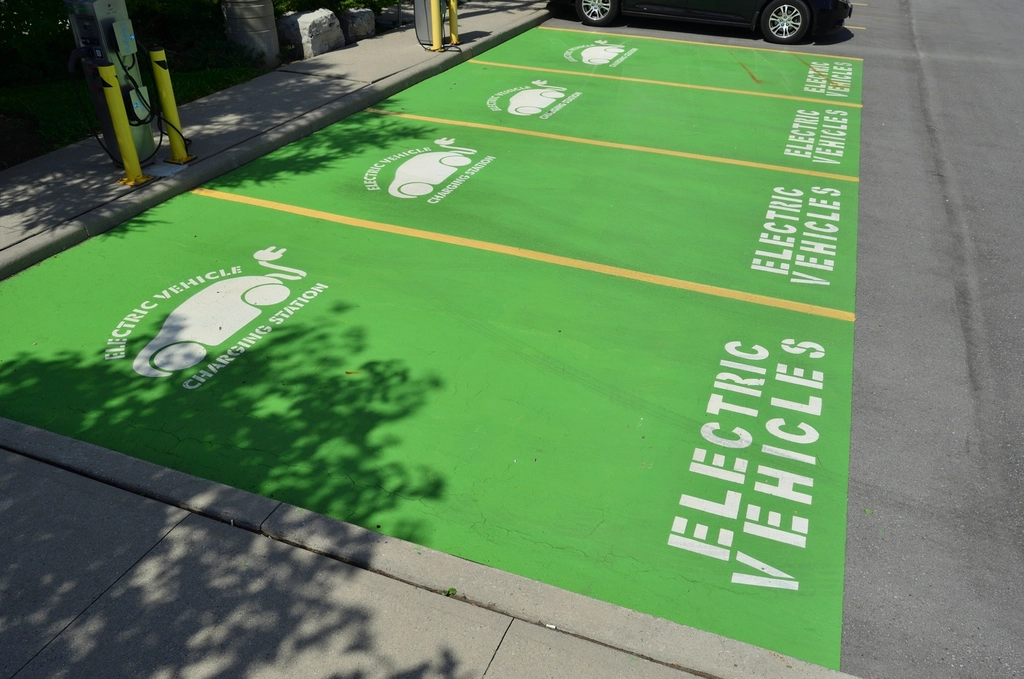
Buying an electric vehicle changes one everyday habit more than any other: how you refuel. Instead of a five-minute stop at a pump, charging becomes something woven into where you park, sleep, shop, and travel. Get that mental model right and an EV is cheaper, quieter, and more convenient than anything with a tank. Get it wrong and you inherit range anxiety you never needed to feel. This guide breaks down how EV charging actually works — the levels, the connectors, the costs, and the habits — so you can charge confidently from your first day of ownership.
🔌 What Is EV Charging?
EV charging is the process of transferring electrical energy from the grid (or a battery, or a solar array) into your vehicle’s traction battery, where it is stored as the fuel that drives the motor. Unlike filling a fuel tank, charging speed depends on a chain of factors — the power source, the vehicle’s onboard charger, the battery’s temperature, and its current state of charge — so the same car can “refuel” at wildly different rates depending on where it is plugged in.
Nearly every charging situation you will meet falls into one of three families, and understanding them is the foundation of everything else:
- 🏠 Level 1 charging uses an ordinary household outlet and trickles in power slowly — perfect for overnight top-ups on low-mileage days, but far too slow for heavy drivers.
- ⚡ Level 2 charging uses a dedicated 240-volt circuit (like a clothes dryer) and is the workhorse of home and workplace charging, replenishing most of a battery overnight.
- 🚀 DC fast charging bypasses the car’s onboard charger to push high-power direct current straight into the battery, adding meaningful range in minutes rather than hours — the backbone of road trips.
Most owners do the overwhelming majority of their charging slowly and quietly at home or work, and reserve fast charging for travel. That single pattern — slow where you park, fast where you pass through — resolves most of the confusion newcomers feel.
🎯 Why Understanding Charging Matters
The strongest reason to learn charging is control. When you understand how energy flows into your car, you stop treating every low battery as an emergency and start planning refueling as effortlessly as you plan where to park.
It saves real money. Charging at home overnight typically costs a fraction of public fast charging, and off-peak electricity rates can cut that further. Knowing when and where to charge is the difference between an EV that is cheap to run and one that quietly overspends.
It protects battery health. Habitual fast charging and routinely charging to 100% add stress over time. Understanding the levels lets you lean on gentle Level 2 charging day to day and save the fast chargers for when you genuinely need speed.
It eliminates range anxiety. Anxiety comes from uncertainty, not from short range. Once you can estimate how far a given charge will take you and where the next plug is, the worry mostly evaporates.
It makes road trips predictable. Long journeys in an EV are entirely practical when you know how fast your car charges, at what state of charge it slows down, and how to sequence stops. That knowledge turns a nervy trip into a routine one.
📈 The Charging Numbers That Actually Matter
EV charging is full of specifications, and it is easy to fixate on the wrong ones — a charger’s headline power rating means little if your car cannot accept it. The numbers below are the ones that shape your real-world experience, grouped by what they tell you, each with an example so you know what “good” looks like.
Power and Speed
- ⚡ Charger power (kW) — the rate at which a charger can deliver energy; higher kW means faster charging, up to the car’s limit. Example: a 150 kW DC charger and a 350 kW charger will charge a car capped at 100 kW acceptance at the same speed — the extra power is wasted.
- 🔋 Onboard charger rating (kW) — the ceiling for AC (Level 1/2) charging built into your car, often 7–11 kW.
- 📏 Miles (or km) of range per hour — a practical way to compare charging speed in terms you actually feel. Example: Level 1 adds roughly 3–5 miles per hour, while a 7 kW Level 2 unit adds around 25–30.
Battery and Capacity
- 🪫 Battery capacity (kWh) — the size of your “tank”; a bigger number means more range but longer full-charge times.
- 📊 State of charge (SoC) — the battery’s current fill level as a percentage, the EV equivalent of a fuel gauge. Example: charging from 20% to 80% is fast; the last 20% deliberately slows to protect the cells.
- 🔄 Charging curve — how fast-charge speed tapers as the battery fills, which is why “0–100%” is a misleading way to judge fast charging.
Cost and Efficiency
- 💰 Cost per kWh — what you pay for energy; home rates are usually far below public fast-charge pricing. Example: home charging might cost a quarter to a third of what the same energy costs at a highway fast charger.
- 🌱 Efficiency (miles/kWh or Wh/mile) — how far your car travels per unit of energy, the EV version of fuel economy.
- ⏱️ Charging losses — the small share of energy lost as heat during charging, higher at slow Level 1 speeds than on efficient Level 2.
⭐ The single most important habit: charge to 80% daily
For everyday driving, set your car to stop at around 80% and plug in whenever you park at home. This keeps the battery in its healthiest range, keeps charging fast (the top 20% is the slowest), and means you almost never start a day with less range than you need. Save the 100% charge for the morning of a long trip.
📋 Charging Levels Cheat-Sheet (Quick Reference)
| Charging type | What it is | Typical speed | Where you use it |
|---|---|---|---|
| 🏠 Level 1 (AC) | Standard 120V household outlet | ~3–5 mi/hr | Home, occasional top-ups |
| ⚡ Level 2 (AC) | Dedicated 240V circuit | ~12–40 mi/hr (7–19 kW) | Home, work, public lots |
| 🚀 DC fast charge | High-power direct current | ~100–250+ mi in 20–40 min | Highways, travel corridors |
| 🔋 Onboard charger | In-car AC-to-DC converter | Caps AC at 7–11 kW | Every Level 1 & 2 session |
| 📊 State of charge | Battery fill percentage | Keep ~20–80% daily | Displayed in-car/app |
| ⏳ Charging curve | Speed taper as battery fills | Fastest below ~60% | Matters on fast chargers |
| 💰 Home rate | Off-peak electricity pricing | Often lowest overnight | Scheduled home charging |
🛠️ Connectors and Charging Options
The plug your car uses and the equipment you install shape your entire charging life. The table below covers the connectors and gear most owners encounter — the details vary by region and brand, but the roles are consistent everywhere.
| Connector / option | Best for | Charge type | Prevalence |
|---|---|---|---|
| 🔌 J1772 (Type 1) | AC charging in North America | Level 1 & 2 | Very common |
| 🔷 Type 2 (Mennekes) | AC charging in Europe | Level 1 & 2 | Very common |
| ⚡ CCS (Combo) | DC fast charging | DC fast | Dominant |
| 🚀 NACS (Tesla) | Tesla & growing US standard | AC & DC | Rising fast |
| 🟢 CHAdeMO | Older/legacy fast charging | DC fast | Declining |
| 🏠 Home Level 2 unit | Daily overnight charging | Level 2 | Recommended |
| 🧳 Portable EVSE | Travel & backup charging | Level 1 & 2 | Common extra |
A quality home Level 2 charger paired with the right connector for your region covers well over 90% of most owners’ needs — the fancy public hardware matters only when you travel.
🔗 Understanding Charging Networks
Public charging is delivered by networks — companies that own and operate charging stations, each with its own app, pricing, and reliability reputation. Knowing the landscape helps you plan trips and avoid the frustration of a dead or incompatible station.
| Network type | What it offers | Best for | Watch out for |
|---|---|---|---|
| 🚀 Tesla Supercharger | Fast, reliable DC network | Long trips, NACS vehicles | Some sites still Tesla-only |
| ⚡ Major DC networks | Highway CCS fast charging | Non-Tesla road trips | Reliability varies by site |
| 🏬 Destination chargers | Level 2 at hotels, malls, lots | Top-ups while you shop/stay | Slow; plan to leave it a while |
| 🏢 Workplace charging | Level 2 during the workday | Commuters without home charging | Availability and queues |
| 🏠 Home charging | Private Level 1 or 2 | Everyday, lowest-cost charging | Needs off-street parking |
The practical takeaway is to keep two or three network apps installed and a route-planning tool handy before any long drive, so a single closed station never leaves you stranded. Roaming and interoperability are improving, but they are not yet universal.
🧭 7-Step Charging Setup Framework (Checklist)
A smooth EV life comes from a little upfront setup, not luck. Work through this checklist in order — you can literally tick each box as you build your charging routine.
💡 Worked Example: A New Owner Applies This
Raj just bought his first EV with a 60 kWh battery and a real-world range of about 240 miles. He commutes 30 miles round-trip and has a driveway. Here is how he sets up his charging life:
- 🏠 Primary location: Home. With only 30 miles a day, he realizes he rarely needs more than a light overnight top-up.
- 🔌 Equipment: He installs a 7 kW Level 2 charger after an electrician confirms his panel has room — adding roughly 30 miles of range per hour.
- 📊 Daily routine: He sets an 80% charge limit and schedules charging for 1 a.m. on his utility’s cheap off-peak rate, so the car is ready each morning for a few cents’ worth of electricity.
- 🚀 Road trips: For a 400-mile family visit, he plans one 25-minute DC fast-charge stop from 15% to 80%, timed around a lunch break.
- ✅ The result: He almost never uses public charging locally, spends far less than he did on petrol, and his longest trip needs just a single planned stop.
Nothing here required special expertise. It required matching his equipment to his actual driving and building two simple habits — charge at home to 80%, fast-charge only when traveling.
⚠️ Common Charging Mistakes to Avoid
Fast charging as your default. Regular DC fast charging is convenient but adds heat and wear; use gentle Level 2 for daily charging and save fast chargers for travel.
Charging to 100% every day. A full battery sits under more stress and charges its final stretch slowly. For most driving, an 80% ceiling is healthier and just as practical.
Running to near-empty routinely. Habitually draining to single digits stresses the battery and leaves no buffer for detours. Treat roughly 20% as your everyday floor.
Judging fast chargers by peak kW. A 350 kW charger does nothing extra if your car accepts only 100 kW. Match expectations to your vehicle’s real acceptance rate.
Ignoring battery temperature. Cold batteries charge slowly; preconditioning (warming the pack before a fast charge, as many cars do automatically when you navigate to a charger) restores speed.
Skipping trip planning. Assuming a charger will be free and working is how trips go wrong. Check reliability, have a backup station, and carry the right apps and adapters.
📖 Glossary of Key Terms
- 🔋 kWh (kilowatt-hour): A unit of energy that measures battery capacity — effectively the size of your EV’s fuel tank.
- ⚡ kW (kilowatt): A unit of power that measures how fast energy is delivered — the charging equivalent of flow rate at a pump.
- 🔌 EVSE: Electric Vehicle Supply Equipment — the technical name for the charging station or “charger” itself.
- 📊 State of Charge (SoC): The battery’s current fill level, expressed as a percentage from 0 to 100%.
- 🔄 Onboard charger: The in-car device that converts AC power to DC for the battery, capping how fast Level 1 and 2 charging can go.
- 🚀 DC fast charging: High-power charging that feeds direct current straight to the battery, bypassing the onboard charger for speed.
- ⏳ Charging curve: The way fast-charge speed tapers as the battery fills, fastest at low state of charge and slowest near full.
- 🌡️ Preconditioning: Warming or cooling the battery to its ideal temperature before charging so it can accept power at full speed.
❓ Frequently Asked Questions
How long does it take to charge an electric car?
Can I charge my EV from a normal household outlet?
Should I charge to 100% every time?
Is DC fast charging bad for my battery?
How much does it cost to charge an EV?
What is the difference between kW and kWh?
Which connector does my car use?
Why does fast charging slow down as the battery fills?
Do I need a home charger installed, or is the portable cable enough?
What happens if I run out of charge on the road?
Does cold weather really affect charging?
🏁 Conclusion
Charging an electric vehicle is not complicated once you internalize the core pattern: charge slowly where you park and fast where you pass through. Level 1 is your backup, Level 2 is your daily workhorse, and DC fast charging is your travel companion. Layer on a few good habits — an 80% daily limit, off-peak scheduling, and a little trip planning — and the whole experience becomes cheaper and less demanding than the gas-station routine it replaces.
You do not need to memorize every connector standard or chase the highest-power charger on the map. You need equipment that matches your driving, a home setup if you can manage one, and the confidence that comes from understanding how energy actually flows into your car. Build those foundations and range anxiety fades into the background, leaving you free to simply drive.
👉 Next step: Work out your typical daily mileage this week and check whether your home parking can support a Level 2 charger — that single answer shapes your entire EV charging setup. Explore more of our EV ownership guides to keep building your knowledge.
