
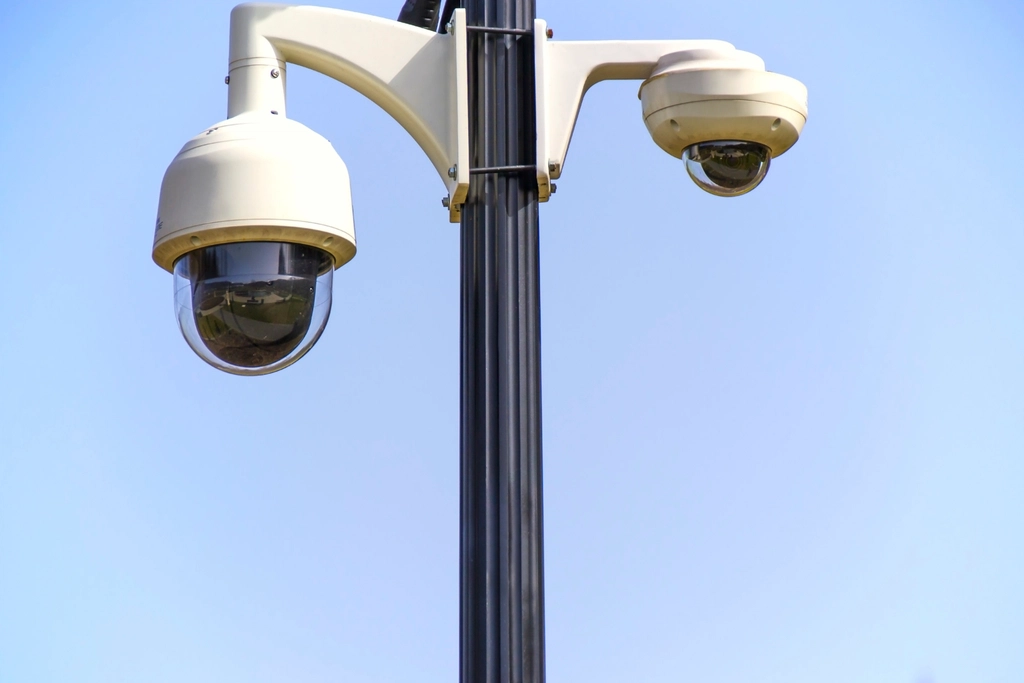
Your home holds nearly everything you care about — the people in it, the possessions you have worked for, and the peace of mind that lets you sleep at night. Yet most break-ins are crimes of opportunity, targeting whichever house looks easiest to enter. A well-planned home security system changes that calculation. It deters intruders before they try, alerts you the moment something is wrong, and gives you eyes on your property from anywhere.
🏠 What Is a Home Security System?
A home security system is a connected network of devices that work together to detect, deter, and document threats to your property.
It helps to think in three broad layers that reinforce one another:
- 🚧 Deterrence stops trouble before it starts — visible cameras, yard signs, motion lights, and sturdy locks that signal a hard target and push opportunists elsewhere.
- 🔔 Detection senses when something is wrong — door and window contacts, motion sensors, glass-break detectors, and cameras that flag a person crossing a boundary.
- 📹 Response and evidence turns detection into action — sirens, push alerts, monitoring that dispatches help, and footage that identifies who was there.
The best systems weave all three layers together. A camera alone documents a crime after the fact; paired with lights and a siren, it can stop that crime in progress.
🎯 Why Home Security Matters
The strongest argument for a security system is prevention. Studies of convicted burglars consistently find visible security measures are among the top reasons they skip a house — you are not just recording crime, you are redirecting it away from your family.
It deters opportunistic crime. Most burglaries are not sophisticated — an intruder spots an unlit, unmonitored home and takes the easy path, so cameras and signage remove your house from that shortlist.
It shrinks your response time to near zero. A monitored alarm or instant phone alert means you learn about a break-in, fire, or leak in seconds rather than hours — often early enough to stop real damage.
It protects against more than burglars. Modern systems fold in smoke, carbon monoxide, water, and freeze sensors, guarding against silent disasters that cause more damage each year than theft.
It can lower your costs and add value. Many insurers discount premiums for monitored systems, and smart-home security is increasingly something buyers expect — partly paying for itself.
📈 The Components That Actually Matter
Security marketing loves to sell gadgets, but a pile of disconnected devices is not a system. The components below are grouped by the job they do.
Sensing the Perimeter
- 🚪 Door and window contacts — two-part magnetic sensors that trigger the instant an entry point opens. Example: a back door with a dead sensor battery is the classic blind spot burglars walk straight through, so these need routine checks.
- 🪟 Glass-break detectors — microphones tuned to the frequency of shattering glass, covering large windows and patio doors a contact sensor would miss.
- 💡 Motion-activated floodlights — bright lights that snap on when someone approaches, startling an intruder and giving cameras a clear shot. Example: a dark side yard turns far less inviting the moment a floodlight tracks anyone who steps into it.
Watching and Recording
- 📷 Indoor and outdoor cameras — the core of any modern system, ideally with night vision, weather sealing, and person detection to cut false alerts.
- 🔔 Video doorbells — a camera at your most-used entry point that captures deliveries, visitors, and porch pirates and lets you speak to whoever is there. Example: a doorbell that pings your phone lets you tell a “delivery driver” casing the house that you can see them — often enough to send them away.
- 💾 Local or cloud storage — where footage lives; local storage keeps you running if the internet drops, while cloud storage survives even if the camera is stolen.
Alerting and Responding
- 📟 Control panel or hub — the brain that connects sensors, arms the system, and relays alarms to you or a monitoring center.
- 📣 Sirens and strobes — loud, visible deterrents that make an intruder want to leave and alert neighbors something is wrong.
- 📞 Professional monitoring — a 24/7 service that verifies alarms and dispatches police or fire crews when you cannot respond.
⭐ The single most important layer: reliable detection at every entry point
Cameras get the attention, but a burglar who is never detected is never stopped. Make sure every exterior door and ground-floor window that opens has a working, tested sensor before you spend on extras.
📋 Component Cheat-Sheet (Quick Reference)
| Component | What it does | Priority | Where to place it |
|---|---|---|---|
| 🚪 Entry sensors | Detect doors/windows opening | Essential | Every exterior door & ground window |
| 📷 Outdoor cameras | Record & deter around perimeter | Essential | Front, back, blind side yards |
| 🔔 Video doorbell | Watch main entrance & visitors | High | Front door at chest height |
| 🚶 Motion sensors | Detect movement indoors | High | Hallways, main living areas |
| 🪟 Glass-break sensors | Catch shattered windows | Medium | Large windows, patio doors |
| 🔥 Smoke/CO detectors | Warn of fire & gas | Essential | Bedrooms, kitchen, each floor |
| 💧 Water/freeze sensors | Catch leaks & burst pipes | Medium | Under sinks, near water heater |
🛠️ System Types and Top Approaches
There is no single right system — the best choice depends on whether you rent or own, your home’s size, and how much you want to manage yourself. The table below compares the main approaches.
| Approach | Best for | Upfront cost | Ease of setup |
|---|---|---|---|
| 🧰 DIY wireless kit | Renters & small homes | Low | Easy |
| 🏢 Professionally installed | Large or complex homes | High | Hands-off |
| 📷 Camera-only setup | Deterrence on a budget | Low | Easy |
| 🔌 Wired/hardwired system | New builds & owners | High | Hard |
| 🏡 Smart-home integrated | Existing smart homes | Medium | Medium |
| 📡 Cellular-backup alarm | Unreliable internet areas | Medium | Medium |
| 🛎️ Monitored subscription | Those wanting dispatch | Low + monthly | Easy |
A simple DIY kit checked monthly protects a home far better than an elaborate professional system nobody bothers to arm.
🔗 Understanding Monitoring Options
Monitoring is what happens after an alarm fires, and it is one of the biggest decisions in your setup. The model you choose changes your cost and how quickly help arrives, so pick one that fits how much you can respond yourself.
| Monitoring type | How it works | Best for | Watch out for |
|---|---|---|---|
| 📵 Self-monitoring | Alerts go only to your phone | Hands-on, budget-focused owners | Useless if you miss the alert |
| 👮 Professional 24/7 | A center verifies & dispatches | Travelers & busy households | Monthly fee, possible false-alarm charges |
| 🔀 Hybrid monitoring | You plus optional pro backup | Those wanting flexibility | Can get confusing to manage |
| 📞 Video verification | Agents check footage first | Faster, prioritized police response | Needs good cameras & coverage |
| 📡 Cellular monitoring | Alarm signals over mobile network | Cut-line & outage protection | Usually a higher plan tier |
No monitoring model is right for everyone. A frequent traveler who sleeps through their phone is better served by professional monitoring, while someone usually home may do fine self-monitoring and keep the savings.
🧭 7-Step Home Security Framework (Checklist)
A secure home comes from a deliberate plan, not a random pile of gadgets. Work through this checklist in order.
💡 Worked Example: A Family Secures Their Home
The Sharma family recently moved into a three-bedroom house on a corner lot, with a dark side yard and a sliding patio door they worried about. On a modest budget and unwilling to run cables through walls, here is how they apply the framework:
- 🔍 The walkthrough: They flag the patio door, an unlit side yard, and a ground-floor bathroom window as the three obvious weak points.
- 🔒 Hardening first: They fit a security bar on the patio door and add reinforced locks to the vulnerable windows before buying any electronics.
- 🧰 The kit: They pick a DIY wireless system — entry sensors on all doors and ground windows, a glass-break sensor near the patio, two outdoor cameras, and a video doorbell.
- 💡 Closing the gap: A motion floodlight now covers the dark side yard, and they choose self-monitoring with an inexpensive cellular backup plan.
- ✅ The result: For a low upfront cost and small monthly fee, every entry point is covered, the side yard lights up on approach, and phone alerts arrive within seconds — turning their most-worried-about door into their best-protected one.
Nothing here required an electrician or a large budget — just walking the property honestly, fixing the basics first, and covering every gap rather than buying the flashiest camera.
⚠️ Common Home Security Mistakes to Avoid
Buying cameras but skipping sensors. Footage of a break-in you were never alerted to is a documentary, not a defense. Detection at entry points comes first.
Leaving default passwords in place. An internet camera with its factory login is a window into your home for strangers. Change every default and enable two-factor authentication.
Advertising when you are away. Posting vacation photos in real time and letting mail pile up tells watchers the house is empty. Use light timers and share trips only after you return home.
Ignoring power and digital backup. A system that dies with the Wi-Fi or the electricity is exactly what a determined intruder counts on. Insist on cellular and battery backup.
Hiding cameras that should deter. Concealed cameras only document; visible ones prevent. Use obvious cameras out front and save discreet placements for evidence angles.
Setting it and forgetting it. Dead batteries, drifting angles, and disarmed panels quietly erode protection. A monthly test keeps the system honest.
📖 Glossary of Key Terms
- 🎛️ Control panel (hub): The central device that links sensors and cameras, arms and disarms the system, and communicates with you or a monitoring center.
- 🚶 PIR sensor: A passive infrared motion detector that senses body heat moving across a space to trigger an alarm or recording.
- 🪟 Glass-break detector: A sensor that listens for the sound frequency of shattering glass, protecting large windows and doors.
- 🧿 Geofencing: A feature using your phone’s location to arm the system when you leave and disarm it when you return.
- 📡 Cellular backup: A mobile-network connection that keeps the alarm reporting even if the internet or phone line is cut.
- 👮 Professional monitoring: A paid 24/7 service that verifies alarms and dispatches police, fire, or medical help on your behalf.
- 🧱 Target hardening: Strengthening physical barriers — locks, deadbolts, reinforced doors — to make forced entry slower and louder.
- 🔐 Two-factor authentication (2FA): A second login step, like a code sent to your phone, that blocks access to your cameras with a stolen password.
❓ Frequently Asked Questions
Do I really need a home security system if I live in a safe area?
How much does a home security system cost?
DIY or professional installation — which is better?
Will my system still work if the power or internet goes out?
Do security cameras actually deter burglars?
Is professional monitoring worth the monthly fee?
Can smart security cameras be hacked?
Where should I place outdoor cameras for the best coverage?
How do I secure my home while I’m on vacation?
Will a security system lower my home insurance?
What should I do first if I’m on a tight budget?
🏁 Conclusion
A home security system is not about fear or gadgets — it is about clarity and control. Knowing every door is watched, that you will be alerted the instant something is wrong, and that help is a signal away transforms your home from an easy target into one criminals skip. The strongest systems layer deterrence, detection, and response and cover every entry point without gaps.
You do not need a massive budget or a professional crew to protect what matters — just an honest walk around your property, a plan that closes every gap, and the discipline to arm and test your system month after month. Build that habit now and your home shifts from hoping nothing happens to being dependably secure.
👉 Next step: Walk around your home today and note every door and window without a working lock or sensor. Fixing that single list of weak points is where every strong home security system begins. Explore more of our home improvement guides to keep building your protection.
