
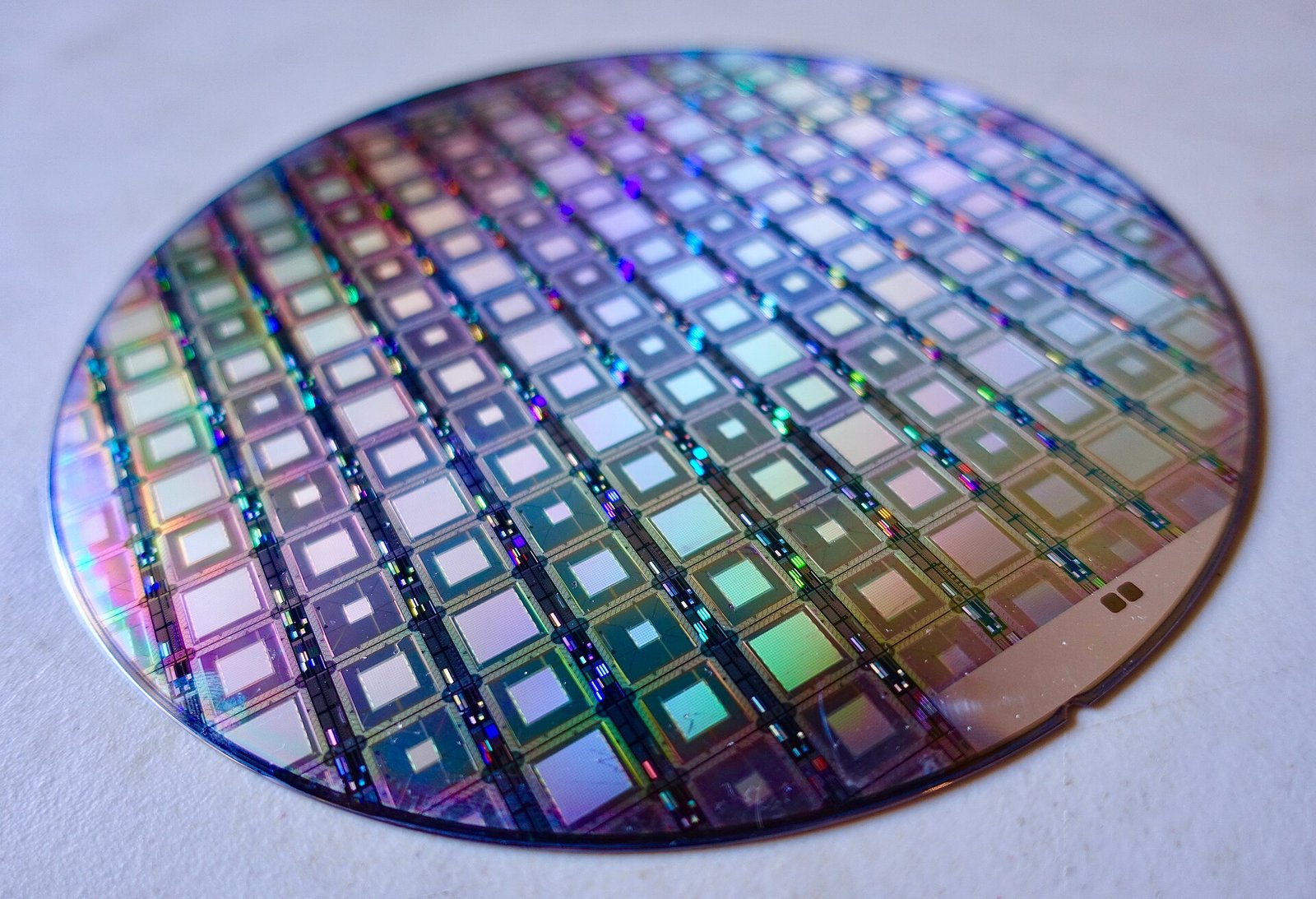
For seventy years computers have done one thing extraordinarily well: manipulate bits that are either 0 or 1, billions of times a second, with flawless reliability. That model has carried us from room-sized mainframes to the phone in your pocket, yet some problems remain stubbornly out of reach — simulating a complex molecule, optimizing a sprawling logistics network, or cracking certain codes could take a classical machine longer than the age of the universe. Quantum computing takes a radically different approach, harnessing the strange rules of the subatomic world to explore those problems in ways ordinary machines never can. Understanding the basics is becoming genuinely useful.
📊 What Is Quantum Computing?
Quantum computing is a way of processing information that uses the principles of quantum mechanics — the physics that governs particles like electrons and photons — instead of the classical logic behind everyday computers. Where a classical machine flips definite switches, a quantum machine manipulates delicate physical states that can hold and combine many possibilities at once.
Three quantum phenomena do the heavy lifting, and almost everything else follows from them:
- 🔀 Superposition lets a quantum bit exist as a blend of 0 and 1 simultaneously, rather than committing to one value until it is measured — so a handful of qubits can represent an enormous number of combinations at the same time.
- 🔗 Entanglement links qubits so that the state of one is instantly correlated with another, no matter the distance — measuring one tells you about its partner, which lets quantum machines coordinate information in ways classical bits cannot.
- 🌊 Interference lets the “waves” of probability that describe qubit states reinforce correct answers and cancel out wrong ones, which is how a well-designed quantum algorithm steers computation toward the solution you want.
None of this makes a quantum computer a faster version of your laptop. It is a fundamentally different tool, brilliant for a narrow set of problems and pointless for most everyday tasks — the goal is not to replace classical computing but to complement it where it hits a wall.
🎯 Why Quantum Computing Matters
The strongest reason to care is that quantum machines promise to crack problems that scale exponentially — problems where each added variable roughly doubles the classical workload until even a supercomputer gives up. A modest quantum advantage on those problems could reshape entire industries.
It could revolutionize drug and materials discovery. Molecules are quantum systems, so simulating them on quantum hardware is natural rather than forced. That could shorten the search for new medicines, catalysts, and battery chemistries from years of trial and error to something far faster.
It threatens — and will reshape — modern encryption. Much of today’s secure communication relies on math that is hard for classical computers but potentially easy for a large quantum one. This is already driving a global shift toward “post-quantum” cryptography before capable machines arrive.
It tackles optimization at a scale we struggle with today. Routing fleets, scheduling factories, balancing power grids, and managing financial portfolios all involve astronomically many combinations. Quantum and quantum-inspired methods offer new ways to find strong solutions faster.
It pushes classical computing forward too. The race to build quantum machines has already produced better algorithms, error-correction ideas, and hardware that benefit conventional computing, even before large quantum computers become practical.
📈 The Concepts That Actually Matter
Quantum computing is wrapped in intimidating jargon, but the working ideas are surprisingly graspable once you separate them into layers. Below are the concepts that genuinely shape how these machines behave, each with a plain-language example so the abstractions feel concrete.
Building Blocks
- ⚛️ Qubit — the quantum equivalent of a bit, but able to hold a superposition of 0 and 1. Example: 10 classical bits store one of 1,024 values at a time, while 10 qubits can represent all 1,024 combinations simultaneously — the reason qubit counts grow so powerful so quickly.
- 🎲 Measurement — the act of reading a qubit, which collapses its superposition into a definite 0 or 1 with a certain probability. Example: you can only ever read out ordinary bits at the end, so algorithms must arrange for the right answer to be the most probable outcome.
- 🚪 Quantum gate — an operation that rotates or entangles qubits to transform their state, the quantum analog of an AND or OR gate.
What Makes It Powerful
- 🧮 Quantum parallelism — the ability to evaluate a function across many inputs at once thanks to superposition, though you still get only one answer out per run.
- 📐 Quantum algorithms — recipes like Shor’s (factoring) and Grover’s (search) that exploit interference to beat the best classical methods. Example: Grover’s algorithm searches an unsorted database in roughly the square root of the classical number of steps — a real but quadratic, not magical, speedup.
- 🌐 Quantum supremacy / advantage — the milestone where a quantum machine solves a task no classical computer can match in reasonable time.
The Hard Parts
- 💥 Decoherence — the loss of fragile quantum states when qubits interact with heat, vibration, or stray fields, which corrupts the computation. Example: many qubits hold their state for only microseconds, so the entire calculation must finish before the quantum information leaks away.
- 🛡️ Quantum error correction — techniques that spread one logical qubit across many physical qubits to detect and fix errors without directly measuring the data.
- ❄️ Extreme operating conditions — many designs require temperatures near absolute zero and heavy isolation, making the hardware large, costly, and delicate.
⭐ The single most important idea: the logical qubit
Raw physical qubits are noisy and error-prone, so the real measure of progress is not how many physical qubits a chip has but how many stable logical qubits it can sustain through error correction. Today it can take hundreds or thousands of physical qubits to build a single reliable logical one. When machines routinely deliver hundreds of logical qubits, the field crosses from experiment into genuine utility.
📋 Quantum Cheat-Sheet (Quick Reference)
| Concept | What it is | Classical analog | Why it matters |
|---|---|---|---|
| ⚛️ Qubit | Quantum unit of information | Bit (0 or 1) | Holds superposition of states |
| 🔀 Superposition | Blend of 0 and 1 at once | None | Enables massive parallelism |
| 🔗 Entanglement | Correlated qubit states | None | Coordinates qubits together |
| 🚪 Quantum gate | Operation on qubit states | Logic gate (AND/OR) | Builds algorithms |
| 🎲 Measurement | Reading a qubit’s value | Reading a bit | Collapses to a definite result |
| 💥 Decoherence | Loss of quantum state | Bit flip / noise | Main obstacle to scaling |
| 🛡️ Error correction | Protecting logical qubits | ECC memory | Makes results trustworthy |
🛠️ The Main Hardware Approaches
There is no settled winner in how to physically build a qubit — several very different technologies are racing in parallel, each with its own strengths and trade-offs. The table below covers the leading approaches so you can recognize them when they appear in the news.
| Approach | How it stores a qubit | Maturity | Challenge |
|---|---|---|---|
| 🔵 Superconducting | Currents in chilled circuits | High | Needs near absolute zero |
| 🪤 Trapped ions | Charged atoms held by fields | High | Slower gate speeds |
| 💡 Photonic | Particles of light | Medium | Hard to make qubits interact |
| ⚛️ Neutral atoms | Atoms held by laser tweezers | Medium | Young but scaling fast |
| 🧊 Silicon spin | Electron spin in silicon | Medium | Precision fabrication |
| 🌀 Topological | Exotic “braided” states | Low | Still largely theoretical |
| 🔥 Quantum annealers | Energy-minimizing systems | Niche | Optimization only |
The best approach for you as a learner is not to pick a favorite but to notice that “number of qubits” means very different things across these platforms — a headline figure only makes sense alongside error rates and connectivity.
🔗 Understanding the Types of Quantum Machines
“Quantum computer” is an umbrella term covering machines built for different purposes. Knowing which type a headline refers to prevents a lot of confusion, because their capabilities barely overlap.
| Type | What it does | Best for | Limitation |
|---|---|---|---|
| 🧩 Gate-based (universal) | Runs general quantum algorithms | Broad, long-term potential | Hardest to build and scale |
| 🔥 Quantum annealer | Finds low-energy solutions | Optimization problems | Not a general computer |
| 🔬 Analog simulator | Mimics another quantum system | Physics and chemistry research | Specialized, not programmable broadly |
| 📶 NISQ devices | Noisy machines available today | Experiments and learning | Too error-prone for big tasks |
| 🌐 Quantum networks | Link qubits across distance | Secure communication | Early-stage infrastructure |
Nearly every machine you can access today is a NISQ device — Noisy Intermediate-Scale Quantum hardware — powerful enough to experiment on but not yet reliable enough for the world-changing applications that grab headlines. Keeping that distinction in mind keeps expectations honest.
🧭 7-Step Learning Framework (Checklist)
Quantum computing rewards a structured approach far more than random reading. Work through this checklist in order — you can tick each box as you build a real, durable understanding rather than a collection of buzzwords.
💡 Worked Example: A Curious Developer Gets Started
Arjun is a backend developer with no physics background who keeps seeing quantum headlines and wants to actually understand them. Rather than reading endlessly, he applies the framework over a few weekends:
- 📚 Prerequisites: He spends a weekend refreshing vectors and matrix multiplication, enough to follow how a gate transforms a qubit.
- ⚛️ One qubit first: He learns that a qubit’s state is a set of probabilities, and that a Hadamard gate turns a definite 0 into a 50/50 superposition.
- 🛠️ Hands-on circuit: Using a free cloud simulator, he builds a two-qubit circuit that entangles a pair and runs it a thousand times, watching the correlated results appear.
- 🔍 One algorithm: He works through Grover’s search on a tiny four-item example and finally sees how interference amplifies the right answer.
- ✅ The result: After a month, Arjun can read a quantum announcement, tell hype from substance, and explain to his team why “50 qubits” says little without error rates.
Nothing here required a physics degree or expensive hardware. It required a structured path, a free simulator, and the willingness to build small things by hand.
⚠️ Common Quantum Misconceptions to Avoid
Thinking a quantum computer is just a faster PC. It is a specialized tool that beats classical machines on a narrow class of problems and is useless or slower for ordinary tasks like email or spreadsheets.
Believing a qubit “tries all answers at once” and reads them all out. Superposition explores possibilities internally, but measurement returns just one outcome — the art is arranging for the right one to dominate.
Equating physical qubit count with power. A chip with thousands of noisy physical qubits may deliver zero reliable logical qubits. Error rates and connectivity matter as much as the headline number.
Assuming encryption is already broken. Today’s machines cannot crack real-world encryption. The threat is real but future, which is exactly why post-quantum standards are being adopted now.
Confusing quantum computing with entanglement-based communication myths. Entanglement does not let you send information faster than light; measurement outcomes are random until compared over a normal channel.
Expecting it to solve every hard problem. Quantum computers offer no guaranteed speedup for most tasks. The advantage is proven only for specific problem structures, not a universal shortcut.
📖 Glossary of Key Terms
- ⚛️ Qubit: The basic unit of quantum information, able to exist in a superposition of 0 and 1.
- 🔀 Superposition: A quantum state that combines multiple possibilities at once until measured.
- 🔗 Entanglement: A strong correlation between qubits such that measuring one reveals information about another.
- 🌊 Interference: The reinforcing and canceling of probability amplitudes that steers an algorithm toward the correct answer.
- 💥 Decoherence: The loss of a qubit’s quantum state due to interaction with its environment.
- 🛡️ Quantum error correction: Methods that combine many physical qubits into one protected logical qubit.
- 📶 NISQ: Noisy Intermediate-Scale Quantum — today’s error-prone, mid-sized machines.
- 🚪 Quantum gate: An operation that transforms qubit states, the building block of every quantum circuit.
❓ Frequently Asked Questions
Will quantum computers replace my laptop?
Do I need to be a physicist to learn quantum computing?
How is a qubit different from a bit?
Can I actually use a quantum computer today?
Will quantum computers break all encryption?
What is decoherence and why is it such a big deal?
What does “quantum supremacy” or “quantum advantage” mean?
Why do people say qubit counts can be misleading?
Which hardware approach will win?
Does entanglement let us communicate faster than light?
When will quantum computing become practical for businesses?
🏁 Conclusion
Quantum computing is neither science fiction nor an imminent replacement for the machines we use every day. It is a profound new way of processing information that turns the strange behavior of the quantum world — superposition, entanglement, and interference — into computational power for a specific and important class of problems. The fundamentals are more approachable than the hype suggests: master the qubit, learn a few gates, build something small, and the mystery gives way to genuine understanding.
You do not need a laboratory or a physics degree to begin, only curiosity and a willingness to work through the ideas in order. Separate the real progress from the marketing, pay attention to logical qubits and error rates rather than headline numbers, and you will be able to follow one of the most consequential technology stories of our era with clear eyes. The field is still being built, which means there has rarely been a better moment to start learning.
👉 Next step: Open a free cloud quantum simulator this week and build a simple two-qubit entanglement circuit. Running it once yourself will teach you more than a dozen articles. Explore more of our technology guides to keep building your understanding.
