
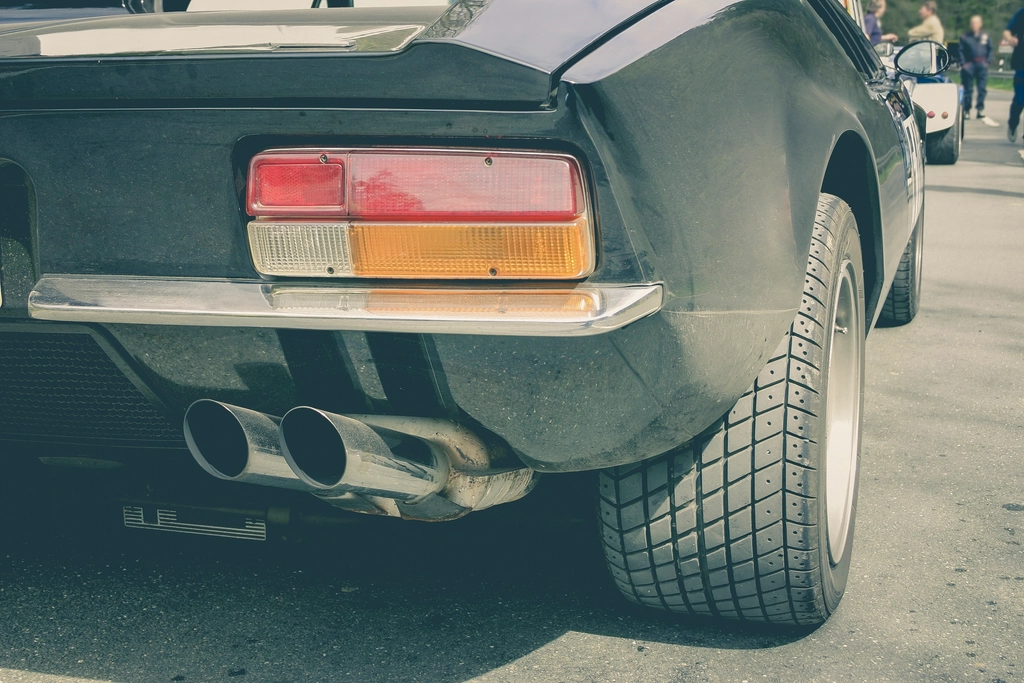
Your tires are the only part of your car that ever touches the road — four contact patches, each roughly the size of your palm, carrying the entire weight of the vehicle, your family, and everything you’re hauling. Everything your car does, from accelerating to braking to holding a line through a wet corner, happens through those small rubber footprints. Neglect them and you gamble with fuel economy, ride comfort, and your safety. Look after them and they reward you with thousands of extra miles, steadier handling, and real money saved. Tire maintenance is the highest-return habit in car ownership, and it takes only minutes.
📊 What Is Tire Maintenance?
Tire maintenance is the routine practice of monitoring and caring for your tires so they stay safe, last as long as possible, and perform the way the manufacturer intended. It is not a single task but an ongoing set of small checks and services that keep the rubber, the air inside it, and the way it wears all within healthy limits.
It helps to think of tire care as resting on three pillars:
- 💨 Inflation keeps the correct volume of air in each tire so it holds its shape, spreads load evenly, and rolls efficiently — the single most impactful and most neglected element of tire care.
- 📐 Alignment and rotation control how the tire sits against the road and how wear is distributed across all four corners, preventing one tire from balding while the others look new.
- 🔬 Condition monitoring is the ongoing inspection of tread depth, sidewall integrity, age, and damage so you catch problems before they turn into a blowout.
Most drivers never think about tires until something goes wrong. That is exactly backward. The goal is not to become a mechanic; it is to build a five-minute habit that catches trouble early and stretches every tire to its full, safe lifespan.
🎯 Why Tire Maintenance Matters
The strongest argument for tire care is simple: it is the difference between stopping in time and not. Braking distance, grip in the rain, and resistance to sudden failure all live in the tires, and all of them degrade quietly long before you notice.
It keeps you safe. Under-inflated or worn tires dramatically lengthen stopping distances and raise the risk of hydroplaning and blowouts. A tire that fails at highway speed can cause a complete loss of control — the one failure most likely to be fatal.
It saves real money. Properly inflated tires roll with less resistance, which typically improves fuel economy by a few percent, and even wear can nearly double how many miles a set delivers. Neglect quietly forces you to buy tires years too soon.
It protects ride quality and the rest of the car. Balanced, aligned tires eliminate vibration and pulling, reduce strain on suspension and steering components, and keep the whole car feeling tight and predictable instead of wandering and harsh.
It prevents small problems from becoming emergencies. A slow leak, a nail, or a bulge caught during a routine check is a cheap plug or a quiet swap in your driveway — the same issue ignored becomes a roadside blowout in the rain at night.
📈 The Checks That Actually Matter
One of the biggest traps in tire care is doing the visible, satisfying things — like a shiny dressing on the sidewalls — while ignoring the checks that actually keep you safe. The items below are organized by what they protect, each with a real-world example so you know what “good” looks like and when to act.
Air and Pressure
- 💨 Tire pressure (PSI) — the air pressure in each tire, measured cold, against the number on your driver’s door jamb. Example: a tire placarded at 35 PSI that reads 28 PSI is running roughly 20% low — enough to cost fuel, wear the edges, and overheat on a long drive.
- 🌡️ Temperature swings — pressure drops about 1 PSI for every 10°F fall in temperature, so a set that was fine in autumn can be dangerously low by midwinter.
- 🔧 Valve caps and stems — the small last line of defense against leaks and grit; a missing cap or cracked stem is a slow-puncture waiting to happen.
Tread and Wear
- 📏 Tread depth — how much grip-generating rubber remains, measured against wear bars or with a gauge. Example: new tires start around 8–10/32″, the legal minimum in many places is 2/32″, but wet grip falls off sharply below about 4/32″.
- 🔀 Wear pattern — even wear across the tread means healthy alignment and inflation; wear on both edges signals under-inflation, a bald center means over-inflation. Example: feathered or one-sided wear usually points to an alignment problem you should fix before it eats a whole tire.
- 🪙 The coin test — a quick field check using a coin’s edge when you don’t have a gauge handy, so there’s never an excuse to skip it.
Structure and Age
- 🧱 Sidewall condition — cracks, cuts, or bulges in the sidewall are serious; a bulge means internal damage and the tire should be replaced immediately. Example: a fist-sized bulge after hitting a pothole means the internal cords have failed — that tire can let go without warning.
- 📅 Tire age — rubber hardens and cracks with time regardless of tread, and most makers advise replacing tires around 6–10 years old whatever the mileage.
- 🔩 Embedded objects — nails, screws, and glass caught early can often be safely repaired instead of forcing a full replacement.
⭐ The single most important habit: Monthly cold-pressure checks
If you do only one thing, check and set your tire pressure once a month, always when the tires are cold, using the PSI on the driver’s door jamb — not the number on the tire itself. Correct inflation touches safety, fuel economy, tread life, and handling all at once, and it is completely free. Nearly every tire problem either starts with, or is made worse by, running the wrong pressure.
📋 Tire-Care Cheat-Sheet (Quick Reference)
| Check | What it does | Target / benchmark | How often |
|---|---|---|---|
| 💨 Air pressure | Keeps load and grip even | Match door-jamb PSI (cold) | Monthly + before long trips |
| 📏 Tread depth | Provides wet grip | Replace at 2/32″; act by 4/32″ | Monthly |
| 🔄 Rotation | Evens out wear | Every 5,000–8,000 miles | With oil changes |
| 🎯 Alignment | Stops pulling & edge wear | Within maker’s spec | Yearly or after impacts |
| ⚖️ Balancing | Removes vibration | Smooth to highway speed | With new tires / if vibrating |
| 🧱 Sidewall check | Catches structural damage | No bulges, deep cracks, cuts | Monthly (visual) |
| 📅 Age check | Flags hardened rubber | Replace by 6–10 years | Read DOT date yearly |
🛠️ The Core Tools You Need
You do not need a professional garage to look after your tires. The kit below covers almost every at-home check and fix — the tools cost far less than a single premature tire replacement, and most fit in a glovebox or a corner of the boot.
| Tool | Best for | Cost tier | Difficulty |
|---|---|---|---|
| 📟 Digital pressure gauge | Accurate PSI readings | Low | Easy |
| 🔌 Portable air compressor | Topping up at home | Low–Medium | Easy |
| 📏 Tread depth gauge | Measuring remaining tread | Low | Easy |
| 🔧 Lug wrench & jack | Rotations & swaps | Low–Medium | Medium |
| 🩹 Plug/patch repair kit | Fixing small punctures | Low | Medium |
| ⚙️ Torque wrench | Tightening lugs correctly | Medium | Medium |
| 📱 TPMS dashboard light | Auto low-pressure alerts | Built-in | Easy |
A cheap gauge used every month beats a garage’s fancy equipment you visit twice a year.
🔗 Understanding Tire Ratings
The wall of code stamped into every sidewall is not decoration — it tells you the tire’s size, speed capability, load limit, and expected longevity. Reading it correctly means you replace like with like and never fit a tire that can’t handle your car’s weight or speed. Here are the key ratings that matter most.
| Rating | What it tells you | Where to read it | Watch out for |
|---|---|---|---|
| 📐 Size code | Width, ratio, and rim diameter | Sidewall (e.g. 205/55R16) | Must match your car’s spec |
| ⚡ Speed rating | Max safe sustained speed | Letter after load index | Never fit below original |
| 🏋️ Load index | Max weight each tire carries | Number before speed letter | Too low risks overloading |
| 🛣️ Treadwear grade | Relative tread longevity | UTQG on sidewall | Only comparable within a brand |
| 📅 DOT date code | Week and year of manufacture | Last 4 digits of DOT code | Avoid tires already years old |
No single rating tells the whole story, so read them together. A tire with a great treadwear grade but a manufacture date five years ago may already be hardening on the shelf — age can quietly cancel out a promising longevity number before the tire ever touches the road.
🧭 7-Step Tire-Care Framework (Checklist)
Good tire care only works when it is a repeatable routine rather than a panic after something feels wrong. Work through this checklist in order — you can literally tick each box as you build the habit.
💡 Worked Example: A Commuter Applies This
Raj drives a mid-size sedan about 30 miles a day and had not thought about his tires since he bought the car two years ago. He noticed the steering pulling slightly right and the front tires looking more worn than the rears. Here is how he applies the framework:
- 🎯 Set the target: He reads the door jamb — 33 PSI — and finds his fronts at 27 PSI and rears at 30 PSI, all running low.
- 💨 Correct inflation: He tops all four to 33 PSI cold with a cheap plug-in compressor, and the car immediately feels more planted.
- 🔬 Inspect and diagnose: The front tires are worn on the outer edges and the car pulls right — classic signs of under-inflation plus a bad alignment.
- 🔧 Service what’s needed: He books a wheel alignment and rotates the tires front-to-rear so the worn fronts move to the lighter-wearing rear axle.
- ✅ The result: The pull is gone, a tank of fuel now goes noticeably further, and the front tires — which were months from being scrapped — will now last close to their full rated mileage.
Nothing here needed a mechanic’s diagnosis. It needed a five-minute pressure check, a careful look at the wear pattern, and acting on what both revealed.
⚠️ Common Tire-Care Mistakes to Avoid
Using the pressure on the tire’s sidewall. That molded number is the tire’s maximum, not your car’s recommended pressure. Always use the lower figure on the driver’s door jamb instead.
Checking pressure when tires are warm. Driving heats the air and inflates the reading, so you’ll set them too low. Always measure cold, before you drive or hours after.
Ignoring the spare. A flat or dry-rotted spare is useless in the exact moment you need it most. Check its pressure and condition a few times a year too.
Skipping rotation. Front tires on most cars wear faster than rears, so never rotating leaves you buying two tires long before the other two are done — wasting half a set.
Overloading the vehicle. Exceeding the load rating heats tires, accelerates wear, and raises blowout risk. Respect both the vehicle and tire load limits when hauling.
Chasing looks over safety. A glossy tire dressing does nothing for grip, and stretched or oversized “stanced” fitments can compromise handling and load capacity. Function first, always.
📖 Glossary of Key Terms
- 💨 PSI (Pounds per Square Inch): The unit used to measure the air pressure inside your tire.
- 📏 Tread depth: The vertical measurement of the grooves in the tire, usually given in 32nds of an inch, that provides grip and channels water.
- 🚗 TPMS (Tire Pressure Monitoring System): An in-car sensor system that lights a warning when one or more tires drops below a safe pressure.
- 🔄 Rotation: The practice of periodically moving tires between wheel positions to even out wear across the set.
- 🎯 Alignment: The adjustment of suspension angles so the tires meet the road squarely, preventing pulling and uneven wear.
- ⚖️ Balancing: Adding small weights to a wheel so it spins without vibration at speed.
- 🧱 Sidewall: The flexible side face of the tire that carries its markings and, when damaged or bulging, signals internal failure.
- 📅 DOT date code: The four-digit stamp showing the week and year a tire was manufactured, used to judge its age.
❓ Frequently Asked Questions
How often should I check my tire pressure?
What is the correct tire pressure for my car?
How do I know when my tires are worn out?
How often should tires be rotated?
If I only track one thing, what should it be?
Can I repair a tire with a nail in it, or must I replace it?
Do tires expire even if the tread looks fine?
Why is my steering wheel vibrating at highway speed?
Should I inflate my tires to the maximum PSI on the sidewall for better mileage?
Do I need special tires for winter?
Is tire maintenance really worth the effort for an average driver?
🏁 Conclusion
Tire maintenance is not about obsessing over your car or spending weekends in the garage. It is about respecting the fact that four small patches of rubber carry everything you care about down the road at speed. Keep them at the right pressure, watch the tread and sidewalls, rotate and align on schedule, and retire them before age or wear turns them into a liability. Do that, and your tires will be safer, last far longer, and save you money the entire time.
You do not need special skills or expensive equipment to start — just a cheap gauge, a monthly reminder, and the willingness to act on what you see. Build the habit now, keep it consistent, and your tires will quietly repay you with grip when it matters most, smoother miles, and fewer unwelcome surprises on the side of the road.
👉 Next step: Find the pressure placard on your driver’s door jamb today, check all four tires cold this week, and set a monthly reminder to do it again. That single habit is the foundation every other tire-care practice is built on.
