
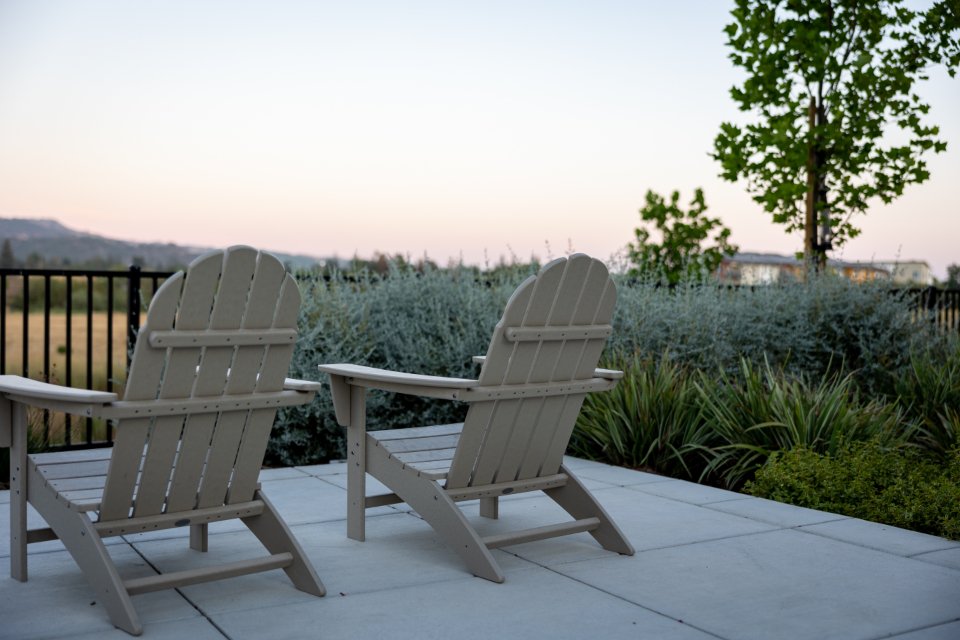
Your yard is the first thing visitors see, yet it is often the most neglected room of the home — one without walls. Good outdoor landscaping changes that. It turns a patchy lawn and a few tired shrubs into spaces you actually want to use: a shaded spot for morning coffee, a border that blooms from spring to fall, a path that leads somewhere worth walking to. It also raises property value and lowers upkeep. This guide shows you how to plan, plant, and build a yard that works.
🌳 What Is Outdoor Landscaping?
Outdoor landscaping is the deliberate shaping of the land around your home to make it more beautiful, functional, and easier to live with. It blends living elements — trees, shrubs, grass, and flowers — with built ones like patios, paths, walls, and lighting into a single coherent design, not a random collection of plants.
It helps to think of any landscape as three layers working together:
- 🧱 Hardscape is the permanent structure — patios, decks, walkways, walls, and fences — that defines how you move through the space and carries the design in winter when plants go dormant.
- 🌿 Softscape is everything living — lawn, trees, shrubs, perennials, and seasonal color — bringing movement, scent, shade, and the changing rhythm of the year to the hardscape’s bones.
- 💡 Systems and features are the supporting layer — irrigation, drainage, lighting, and focal points like a water feature or fire pit — that keep the other layers healthy and let you enjoy the yard after dark.
The best yards balance all three layers so the space looks intentional and holds up year-round, not just for the two showy weeks a nursery haul provides.
🎯 Why Good Landscaping Matters
The most persuasive argument for landscaping is return. A well-designed yard is one of the few home improvements that pays you back in daily enjoyment and in resale value.
It boosts curb appeal and resale value. Mature trees, tidy beds, and a welcoming entrance can add meaningfully to a home’s sale price and help it sell faster, since buyers form an opinion in seconds.
It extends your living space. A patio, shaded seating area, or outdoor kitchen effectively adds a room for meals, work, or gathering at a fraction of the cost of an interior addition.
It saves money over time. Smart plant choices, mulch, and efficient irrigation cut water bills and replacement costs, and a yard planted for your climate needs far less fussing.
It supports comfort and the local ecosystem. Shade trees cool the house in summer, windbreaks blunt cold drafts, and native plantings feed pollinators and birds.
📈 The Design Principles That Actually Matter
One of the biggest traps in landscaping is buying plants before you have a plan. The principles below are the ones professional designers lean on, grouped by how you actually experience a yard.
Structure and Flow
- 🚶 Movement and circulation — how people naturally walk through the space, guided by paths and openings. Example: a five-foot main path lets two people walk side by side, while a 30-inch trail signals a quiet, single-file route.
- 📐 Scale and proportion — matching plant and feature size to the house and lot so nothing overwhelms or disappears.
- 🎯 Focal points — a specimen tree, sculpture, or bench that anchors a view. Example: a single Japanese maple at the end of a sightline does more than a dozen scattered shrubs.
Color and Planting
- 🌸 Layered planting — tall trees, mid-height shrubs, then groundcover, so beds read as full and finished.
- 🎨 Seasonal succession — plants that peak at different times so something is always in color. Example: spring bulbs, summer perennials, and fall grasses keep a single bed interesting across three seasons instead of two showy weeks.
- 🍃 Repetition and rhythm — repeating a plant, color, or shape to tie separate beds into one composition.
Comfort and Function
- 🪑 Outdoor rooms — defined zones for dining, lounging, or play, each sized for its real use.
- 🌤️ Shade and shelter — pergolas, trees, and screens that make a space usable in midday heat or wind.
- 🔦 Low-voltage lighting — path, uplight, and accent fixtures that make the yard safe after sunset. Example: three well-placed uplights on a mature tree create more nighttime drama than a dozen flat floodlights.
⭐ The single most important principle: Right Plant, Right Place
More landscapes fail from this one mistake than any other. Match every plant to the sun, soil, water, and space it will actually have — a shade-lover baked in full sun, or a shrub that wants ten feet crammed into three, is doomed however well you tend it.
📋 Landscaping Cheat-Sheet (Quick Reference)
| Element | What it does | Typical cost/effort | Where it works best |
|---|---|---|---|
| 🌳 Shade tree | Cools the home, anchors the yard | Low cost, high long-term payoff | South/west of the house |
| 🧱 Patio / paver area | Creates usable outdoor living space | High upfront, low upkeep | Off a main door, level ground |
| 🌿 Perennial bed | Returning color with no replanting | Medium; fills in over 2–3 years | Borders, foundation lines |
| 🪵 Mulch layer | Holds moisture, blocks weeds | Low; refresh yearly | All beds and tree rings |
| 💧 Drip irrigation | Delivers water efficiently to roots | Medium install, saves water | Beds, containers, veg gardens |
| 🔦 Low-voltage lighting | Safety plus nighttime beauty | Medium; DIY-friendly kits | Paths, steps, feature trees |
| 🔥 Fire pit | Draws people to gather outdoors | Low to medium | Open, wind-sheltered corner |
🛠️ Popular Landscaping Features to Consider
You do not need every feature at once, and cramming them in usually reads as clutter. The table below covers the most rewarding additions for a typical yard, so you can pick the one or two that fit.
| Feature | Best for | Budget | DIY-friendly? |
|---|---|---|---|
| 🪵 Raised garden beds | Growing food & herbs | Low | Yes |
| 🏡 Pergola or arbor | Shade & vertical interest | Medium | Yes (kits) |
| 💦 Water feature | Sound & a calm focal point | Medium–High | Small ones |
| 🪨 Rock / gravel garden | Low-water, low-maintenance areas | Low–Medium | Yes |
| 🌾 Native meadow / wildflowers | Pollinators & low upkeep | Low | Yes |
| 🍳 Outdoor kitchen | Entertaining & dining | High | No (usually) |
| 🧱 Retaining wall | Managing slopes & terracing | Medium–High | Short walls only |
A single, well-built feature you finish beats three half-started projects under a tarp all summer.
🔗 Understanding Garden Styles
A garden style is the overall look that ties your choices together — the plants, materials, and shapes that make a yard read as formal, wild, or serene rather than accidental. Pick one that fits your home’s architecture and your appetite for maintenance, then let it guide each decision.
| Style | Signature look | Best for | Watch out for |
|---|---|---|---|
| ✂️ Formal | Symmetry, clipped hedges, straight lines | Traditional homes, tidy tastes | High trimming and upkeep |
| 🌾 Cottage | Dense, informal drifts of color | Casual charm, pollinators | Can look messy without edging |
| 🏜️ Xeriscape | Gravel, succulents, drought plants | Dry climates, low water use | Poor fit for humid, wet regions |
| 🍃 Modern / minimalist | Clean lines, limited palette, mass planting | Contemporary architecture | Mistakes show with nowhere to hide |
| 🌱 Native / naturalistic | Local plants in loose, layered groups | Low maintenance, wildlife | Needs a tidy edge to look intentional |
No style is objectively best; the right one depends on your climate, your home, and how much time you can give it. A busy household in a dry region, for instance, is far happier with a native approach than a high-clipping formal garden.
🧭 7-Step Landscaping Framework (Checklist)
A great yard is built in order, not all at once. Work through this checklist from the top, ticking each box as you move from bare ground to finished landscape.
💡 Worked Example: A Family Redoes Their Backyard
The Sharmas have a plain backyard — patchy grass, a corner that stays muddy, and a bare fence. With two kids and a modest budget, they want a space the whole family can use. Here is how they apply the framework:
- 🔍 Assess: They find the back third bakes in afternoon light, while the muddy corner sits in shade and collects roof runoff.
- 🎯 Define uses: They want a dining patio, an open lawn for the kids, and privacy screening along the bare fence.
- 🧱 Hardscape first: They lay a paver patio in the sunny zone, add a gravel drain to fix the muddy corner, and run a drip line to the beds.
- 🌳 Plant in order: Three fast-growing trees screen the fence, a shade-tolerant fern-and-hosta bed fills the reclaimed corner, and turf holds the play area.
- ✅ The result one season later: The mud is gone, the kids have real lawn, and the family eats dinner on the patio most warm evenings — all done in phases, without a designer.
Nothing here required a big budget or a professional crew — only reading the site honestly, fixing the drainage before planting, and building in the right order.
⚠️ Common Landscaping Mistakes to Avoid
Planting for today’s size, not tomorrow’s. That cute shrub can become a monster that swallows a walkway — plant for the mature dimensions on the tag, not the pot.
Ignoring drainage and grading. Water that pools or runs toward the house rots foundations and drowns plants, so solve where water goes before you plant.
Fighting your climate and soil. Forcing thirsty, delicate plants into a dry or clay-heavy yard means endless watering; choose plants suited to your conditions instead.
Skipping the plan and buying impulsively. A cart full of whatever bloomed at the nursery rarely adds up to a coherent yard, so design first and shop second.
Neglecting maintenance from the start. A design you cannot keep up with becomes an eyesore, so match the plan to the hours you will realistically give it.
Over-mulching against trunks. Piling mulch into “volcanoes” against a trunk traps moisture and invites rot — keep it a few inches back and two to three inches deep.
📖 Glossary of Key Terms
- 🧱 Hardscape: The built elements of a landscape — patios, paths, walls, and fences.
- 🌿 Softscape: The living elements — lawn, trees, shrubs, flowers, and groundcover.
- 🌾 Perennial: A plant that lives for several years, dying back and returning each season.
- 📅 Annual: A plant that completes its life cycle in one growing season and must be replanted.
- 🏜️ Xeriscaping: Landscaping designed to minimize water use through drought-tolerant plants.
- 🍃 Groundcover: Low, spreading plants that carpet the soil to suppress weeds and reduce erosion.
- 💧 Drip irrigation: A system that delivers water slowly and directly to plant roots, cutting waste.
- 📐 Hardiness zone: A climate-based rating that tells you which plants can survive the winters in your region.
❓ Frequently Asked Questions
How much does landscaping a yard typically cost?
What’s the best time of year to plant?
Do I need a professional designer, or can I DIY?
What are the lowest-maintenance landscaping options?
If I only fix one thing first, what should it be?
How do I choose plants that will actually survive?
How can I make a small yard feel bigger?
Is a lawn worth keeping, or should I replace it?
How long until a new landscape looks established?
What can I do to attract pollinators and birds?
Does landscaping really add to my home’s value?
🏁 Conclusion
Great outdoor landscaping is not about buying the most plants or the fanciest fire pit — it is about clarity. Knowing your site, deciding how you want to live outside, and building in the right order turns a plain yard into spaces you genuinely use.
You do not need a huge budget or a professional crew to begin — just read your yard honestly, fix the unglamorous things like drainage first, and build patiently season by season. Plant the bones now and tend them consistently, and your outdoor space will grow from a chore you avoid into the favorite room of your home.
👉 Next step: This weekend, walk your yard at a few different times of day and sketch a rough map of where sun, shade, and water actually fall. That single site assessment is where every successful landscape begins — then explore more of our home improvement guides to keep building your plan.
